Bandaje Arbi Traverse
Two days from Sunkasale over Ballalarayana Durga and down past the falls to Ujire — the finest walk in these hills.
The ridge traverse most trekkers rate the best in this part of the Western Ghats: up to the Hoysala fort at Ballalarayana Durga from Sunkasale, along the open grassland ridge with the Charmadi valley on one side, then a long descent past the Bandaje Arbi falls to Ujire on the coastal side. About 22 km, usually done over two days with a night on the ridge.
What to do here
- Climb to Ballalarayana Durga from Sunkasale
- Walk the grassland ridge with the Charmadi valley below
- Camp at a permitted spot on the ridge
- Descend past Bandaje Arbi falls to Ujire
The one multi-day trek in the district, and the only one that takes you from the plateau to the coastal plain on foot.
History
The route follows the old ridge paths between the Malnad and the coast that the Ballalarayana Durga fort was built to watch over.
Travel tips
Forest permissions are required on both the Chikmagalur and Dakshina Kannada sides — go with a registered operator who holds them; this is not a route to improvise. Two days, 22 km. Carry 4 L of water capacity, tent and sleeping bag, a rain shell, a head torch and photo ID.
Please note
Do: book through a registered operator holding both districts' permissions. Do: go in a group — the descent side is remote with no phone coverage. Do: carry salt and full socks; the descent is leech country most of the year. Do: carry out everything, food waste included. Don't: attempt it as a day walk. Don't: do the descent in heavy rain; the rock above the falls is lethal wet. Don't: camp outside the permitted spots. Don't: swim above the falls.
Combine your trip
Places near Bandaje Arbi Traverse
 Viewpoint
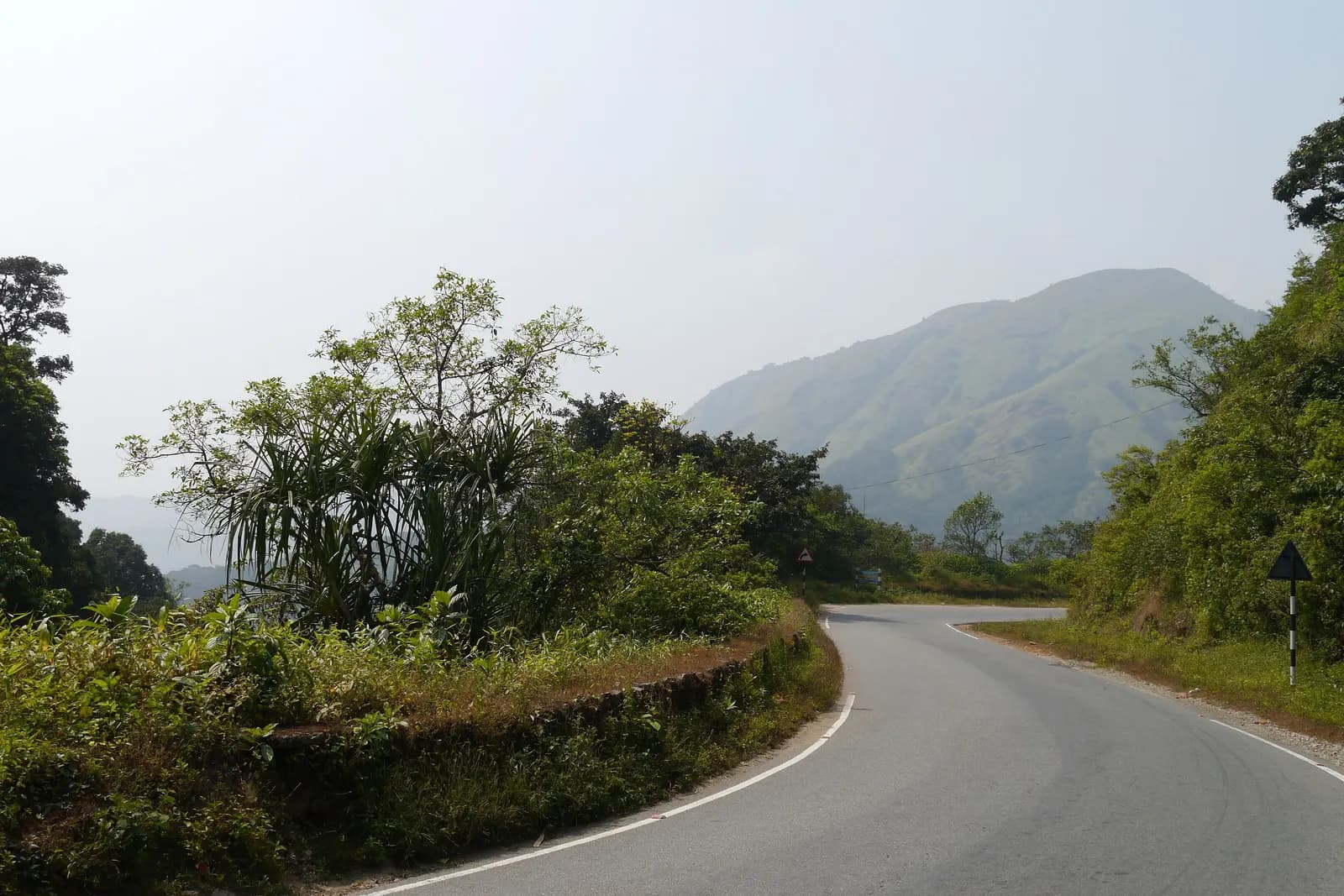
Charmadi Ghat
Twenty-five kilometres of hairpins off the plateau to the coast, through the wettest forest in the district.
Ballalarayana Durga
A Hoysala hill fort on the Charmadi ridge, reached on foot through shola grassland.
Sarva Siddhi Ganapathi Temple, Samse
A Ganapathi shrine standing in the middle of a tea estate, ten kilometres from Kalasa.
Jenukallu Gudda
Honey-rock hill — named for the wild hives on its cliffs, and they are still there.