Kudremukh National Park
Six hundred square kilometres of shola grassland and rainforest — tiger, hornbill, and the source of three rivers.
Kudremukh National Park covers the high country west of Kalasa: rolling shola grassland on the ridges, wet evergreen forest in the valleys, and among the highest rainfall in India. It holds tiger, leopard, dhole, gaur, sambar, lion-tailed macaque and Malabar giant squirrel, and it is part of the Western Ghats UNESCO World Heritage listing. Three rivers — the Tunga, the Bhadra and the Netravathi — rise inside it at Gangamoola.
What to do here
- Book a permitted trek — Kudremukh peak, Kurinjal, Gangadikal or Netravathi
- Stay at Bhagavathi Nature Camp inside the park
- Watch for lion-tailed macaque and Malabar hornbill
- Visit Hanuman Gundi and Kadambi falls on the park road
The wildest protected area in the district and one of the most important surviving blocks of Western Ghats rainforest, on a par with Silent Valley and Agumbe for endemism.
History
The area was mined for iron ore for three decades; the mine was ordered shut in 2005 and the park has been consolidating ever since. Bhagavathi Nature Camp, near the river source, is now the base for the park's trekking programme.
Travel tips
Treks are permit-only and booked in advance through the Karnataka Forest Department's online system — there is no counter sale, and slots for the popular peaks go the moment they open. Base yourself at Kalasa or inside the park. Leeches are relentless from June to September.
Please note
Do: book your permit in advance and carry the government ID it was issued against. Do: carry every scrap of packaging back out; plastic is banned inside the park. Do: keep to the marked trail and stay with your guide. Don't: camp anywhere except the designated camp — wild camping is an offence. Don't: light fires, smoke, or play music. Don't: expect a refund or a date change if you miss your slot; the policy is zero-refund.
Combine your trip
Places near Kudremukh National Park
Kadambi Falls
A thirty-foot fall through rock inside Kudremukh National Park, right beside the road.
 Trek
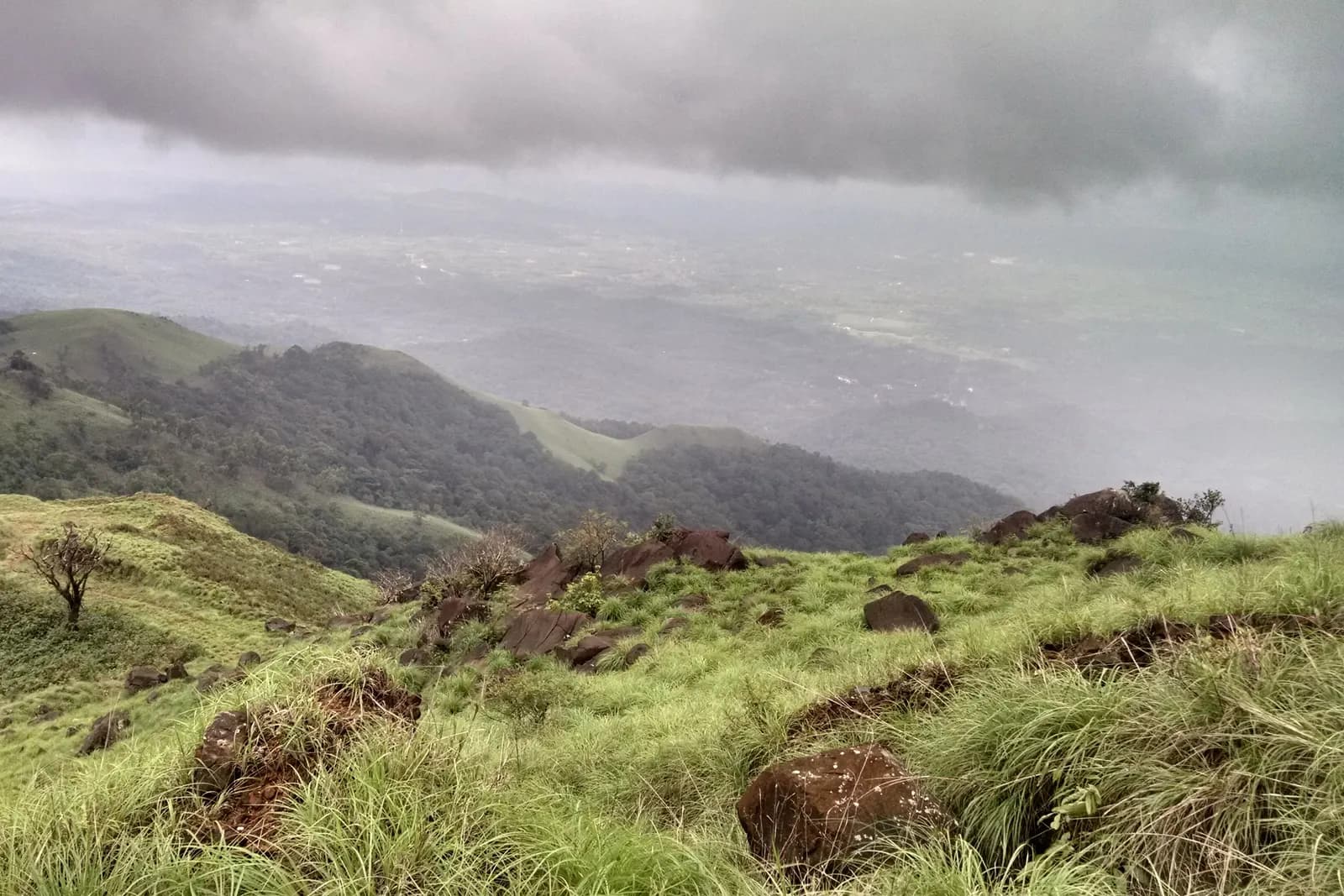
TrekKurinjal Peak
Seven kilometres each way from Bhagavathi camp, through rainforest into grassland.
 Dam
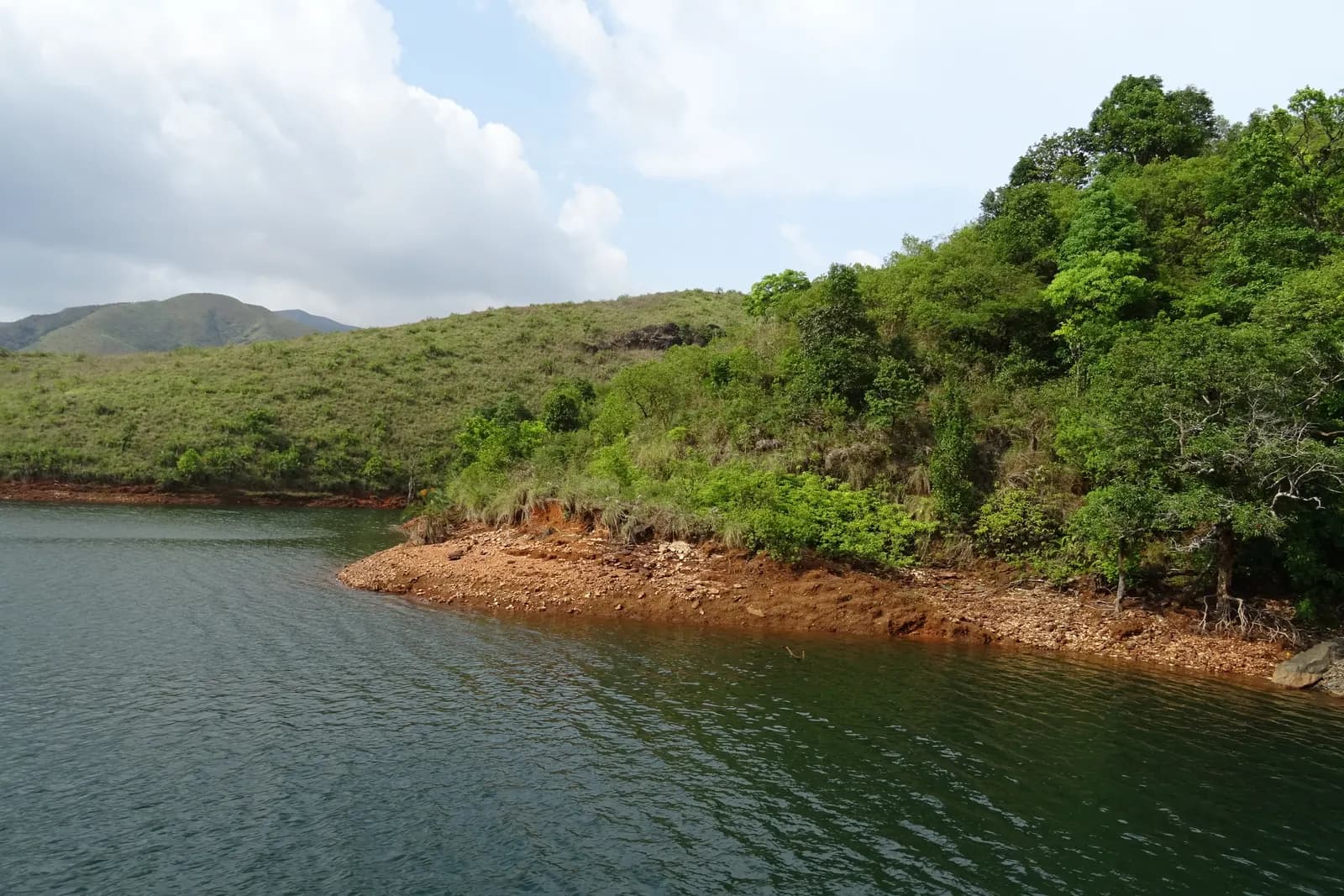
DamLakya Dam
The mine's old tailings dam, now a still green sheet of water under the Kudremukh grasslands.
 Waterfall
Hanuman Gundi Falls
A rock-cut plunge inside Kudremukh park